A Deep Dive into the 85% of the Archipelago the Brochures Forget to Mention.
The Illusion of the Postcard
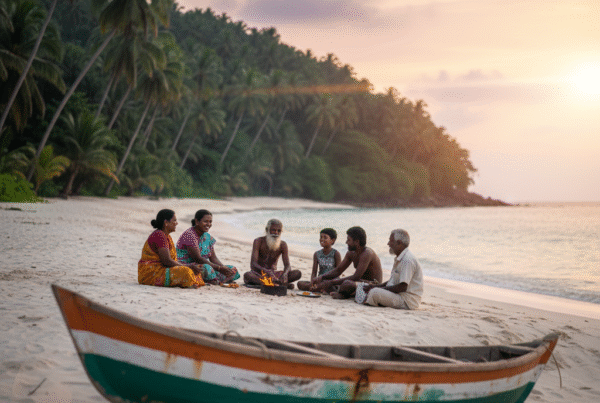
Most travelers arrive at Veer Savarkar International Airport with a mental checklist: Radhanagar Beach, Elephant Beach and perhaps a sunset at Chidiyatapu. They are sold as a “3-Beach Paradise.” But looking at the data, the Andaman & Nicobar Islands consist of 572 islands, of which only 38 are permanently inhabited.
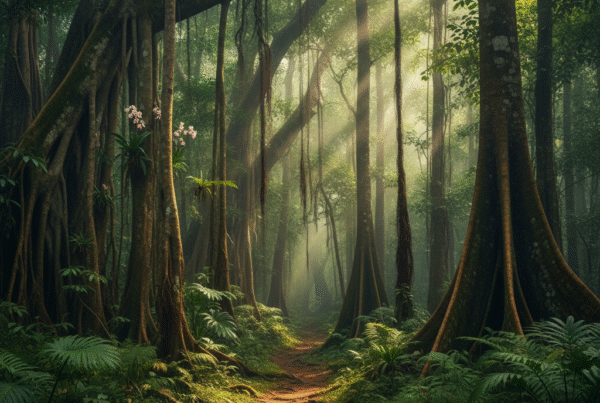
The “Beach” is the gateway, but the “Islands” are the cathedral. While the white sands are a geological marvel—formed largely by crushed coral and calcium carbonate—the true identity of Andaman lies in its Primary Tropical Rainforests, which cover over 87% of its total land area.
The Mangrove Architecture
If you want to understand the “soul” of these islands, you have to look at the Mangrove Ecosystems. Andaman houses some of the most diverse mangrove forests in India, featuring species like Rhizophora and Avicennia.
- The Fact: These aren’t just trees; they are the islands’ biological “skin.” During the 2004 Tsunami, areas with dense mangrove cover saw significantly less inland damage.
- The Experience: When you kayak through the mangrove creeks of Havelock or Baratang, the air temperature drops by 3–4 degrees. The silence is absolute, broken only by the sound of the Kingfisher or the movement of a Saltwater Crocodile.
The Great Andaman Trunk Road (ATR)
The ATR is more than a road; it is a controversial and fascinating artery that cuts through the heart of the Jarawa Tribal Reserve. While travelers pass through in convoys, the forest here is a “Time Capsule.” It houses trees like the Andaman Padauk (Pterocarpus dalbergioides)—a wood so durable and beautiful it was historically exported for the flooring of Buckingham Palace.
Bliss Insider Data: > * Endemic Species: Andaman is home to over 250 species of birds, of which 14 are endemic (found nowhere else on Earth), including the Andaman Wood Pigeon and the Andaman Serpent Eagle.
- The Depth: The waters surrounding the islands reach depths of over 1,000 meters just a few kilometers from the shore, which is why the blue of the water shifts so dramatically from turquoise to midnight ink.
The Bliss Data Corner
- Archipelagic Scale: Out of 572 islands, only 38 are permanently inhabited, leaving over 90% of the territory as untouched wilderness.
- Exclusive Economic Zone (EEZ): The islands contribute nearly 30% of India’s total EEZ, making this small landmass a massive maritime asset.
- Coastline Density: A staggering 1,962 km of coastline—more than the entire western coast of mainland India.