Why Every Journey to the Andamans Must Begin with an Act of Remembrance.
Architecture as an Instrument of Control
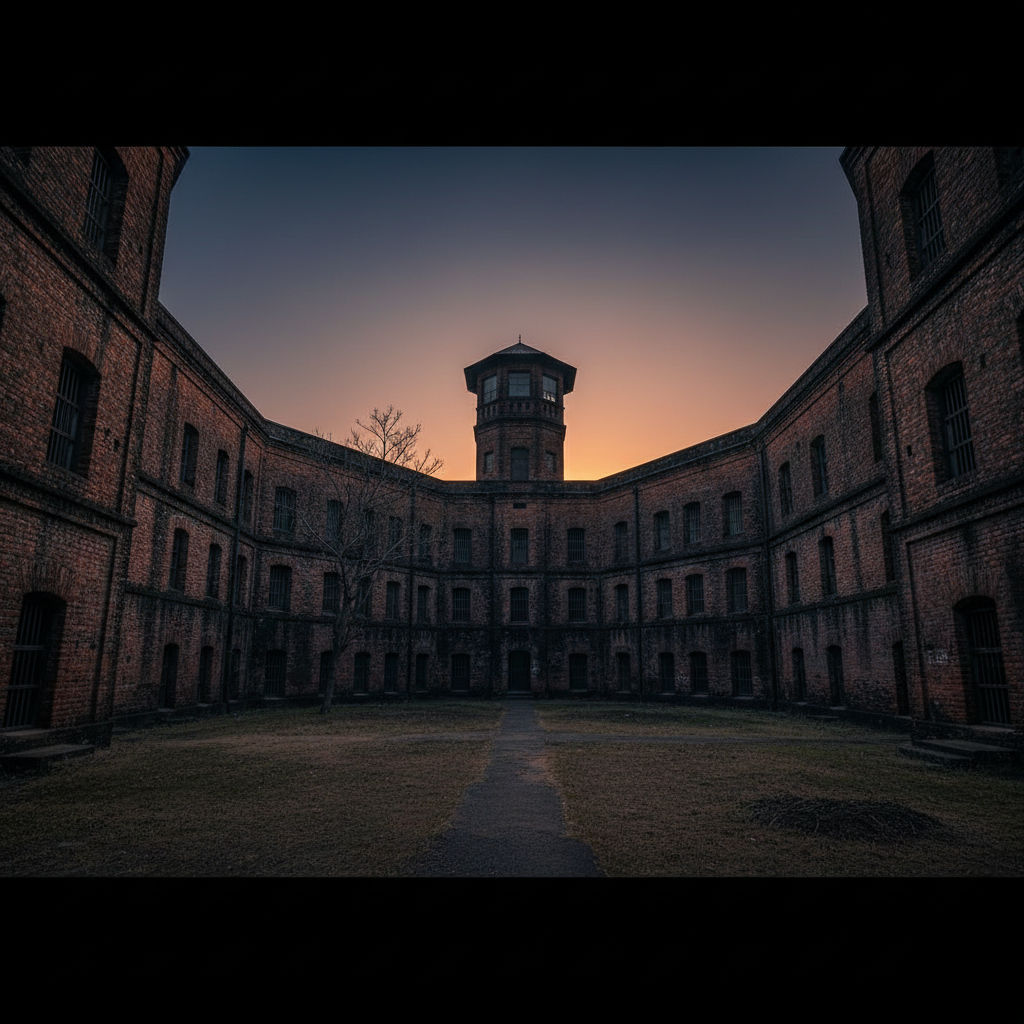
The Cellular Jail or Kala Pani, was not merely a prison; it was a “Mechanical Panopticon.” Completed in 1906, its design was based on the “Pennsylvania Model” of isolation. The seven wings radiated from a central watchtower, but the cells were positioned so that the face of one cell looked at the back of another.
- The Math of Isolation: There were 693 cells, each measuring roughly 13.5 by 7.5 feet.
- The Psychological Weight: Unlike the mainland jails where prisoners worked in groups, here, the work was solitary. Prisoners were forced to extract 30 pounds of coconut oil a day. If they failed, they were subjected to the “Flogging Stand.”
The Co-existence of Joy and Grief
The most jarring experience for a traveler is the geography of Port Blair. You can stand on the terrace of the jail—the site of immense human suffering—and look out over the North Bay Island lighthouse (the one featured on the old ₹20 note).
This is the “Andaman Paradox.” The beauty of the landscape was used as a tool of the British Empire; the very isolation that makes the islands a “paradise” today made them a “hell” for freedom fighters like Vinayak Damodar Savarkar and Batukeshwar Dutt.
A Note on the Light & Sound Show
To see the jail without the Light & Sound Show (narrated by the legendary Om Puri in the Hindi version) is to miss the voice of the building. The show humanizes the stones, turning a “monument” back into a “story.”
Historical Milestone: > * 1942–1945: During WWII, the Japanese occupied the islands. The Cellular Jail changed hands, and the suffering continued under a different flag. This layer of history is often overlooked but is crucial to understanding the resilient spirit of the local “Ranchi” and “Settler” communities.
- The Peepal Tree: The old Peepal tree in the courtyard is the only “living witness” left that stood during the entire era of the freedom struggle.
The Bliss Data Corner
- Construction Timeline: It took 10 years (1896–1906) to build the 7-wing structure using bricks brought specifically from Burma (Myanmar).
- The Scale of Solitude: 693 individual cells were designed to ensure zero human contact between inmates.
- Martyrdom Records: Over 1,000+ freedom fighters were incarcerated here during the peak of the struggle between 1909 and 1938.